

What Is Pneumatic Compression and How Does It Help Treat Lymphedema? You've Found Your DME in Boulder County!
Jun 08, 2026
When swelling becomes stubborn, it’s often not because someone “isn’t trying hard enough.” It’s because the lymphatic system is asking for consistent mechanical support, the kind that assists fluid movement when the body can’t keep up on its own.
That’s where pneumatic compression comes in.
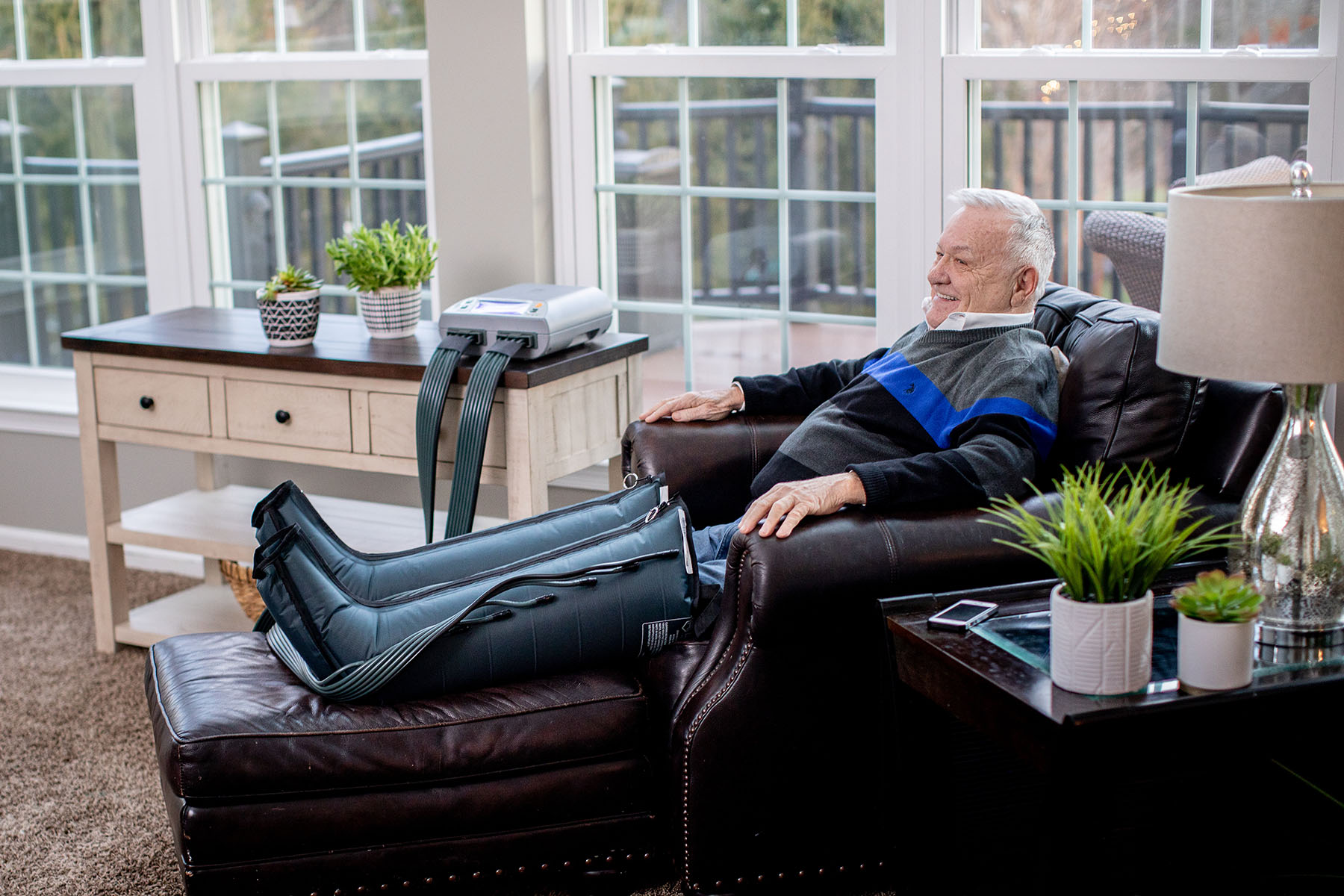
Pneumatic compression (also called intermittent pneumatic compression, or IPC) uses an at-home pump connected to a sleeve, boot, or garment with multiple air chambers. The device inflates and deflates in cycles, applying gentle, sequential pressure, typically moving from distal to proximal (for example, from foot toward thigh, or hand toward shoulder). This external “pumping” helps encourage fluid movement and supports circulation.
How IPC is used in lymphedema care
IPC is commonly used as part of a long-term lymphedema management plan, especially when swelling is chronic, involves multiple regions, or needs a reliable home routine between therapy visits. Consensus guidance recognizes IPC as a tool that may be used in selected patients as part of ongoing management.
In clinical research, home-based IPC programs have been associated with maintaining limb volume and improving quality of life, particularly when programs are designed to mimic manual lymphatic drainage patterns.
Where it fits with Complete Decongestive Therapy (CDT)
Think of IPC as an assist, not a replacement for the foundations of care. For many people, the best outcomes happen when IPC supports (and doesn’t compete with) the big pillars: compression garments, movement, skin care, and an individualized plan.
Some studies and reviews suggest that adding IPC to other conservative approaches can improve outcomes for certain patients. However, the research is mixed depending on the condition, device features, and protocols.
What makes AIROS Medical devices stand out
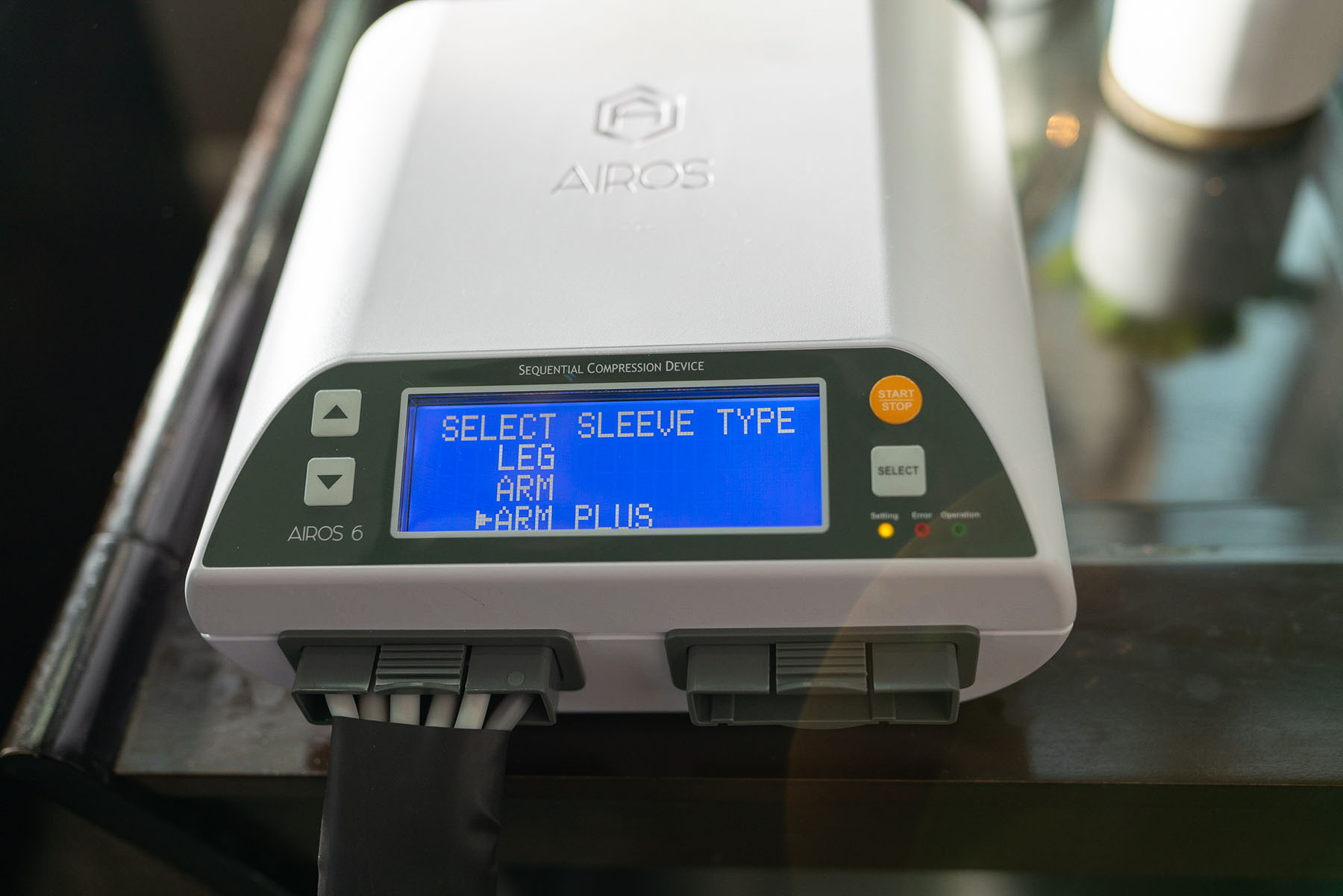
Simple user-friendly controls, to start with: Not all pumps are built the same. One reason AIROS Medical has become a go-to in the pneumatic compression space is the combination of multi-chamber garments, customizable treatment modes, and options for patients with more complex swelling patterns, including truncal involvement.
AIROS 6 and AIROS 6P (E0651 category)
- 6-chamber sequential compression designed for at-home treatment of chronic swelling/venous or lymphatic disorders.
- The AIROS 6P adds a Peristaltic Mode (wave-like pattern) that some clinicians prefer for upper extremity treatment.
- AIROS also supports pants-style garments to address lower-body and lower-truncal swelling (abdomen/pelvis/hips), which can be clinically important for many patients.

AIROS 8 (and expanded truncal options)
- AIROS 8 is FDA-cleared, 8-chamber sequential compression for upper/lower extremities and trunk.
- The product catalog describes features many patients and clinicians care about:
- Gradient Mode and Pressure Mode (with chamber-level adjustability in Pressure Mode)
- Optional Lymphedema Preparation Treatment (LPT) modes like “Clearing” and “Focal”
- A vacuum function to help remove air from garments after therapy for easier doffing
- In 2025, AIROS announced an expanded line of truncal garments with more sizing inclusivity, helpful for complex, multi-region swelling.
A truly unique development: AIROS’s PAD-focused device (ARTAIRA)
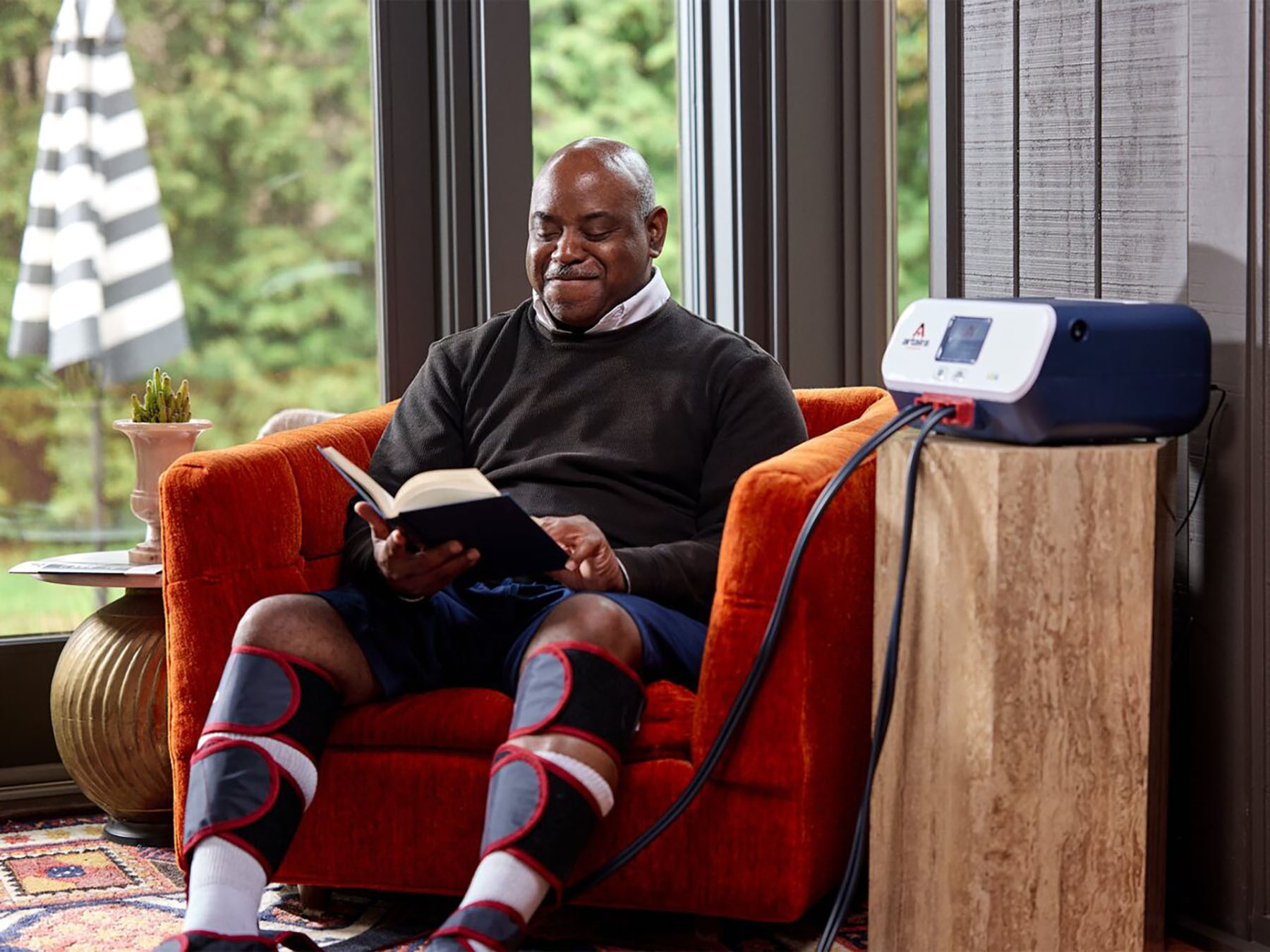
AIROS launched ARTAIRA, an FDA 510(k)-cleared arterial compression device designed specifically to help treat symptoms of peripheral arterial disease (PAD) and even chronic limb-threatening ischemia (CLTI). AIROS describes ARTAIRA as delivering rapid, high-pressure intermittent compression to increase blood flow and circulation to the lower legs, feet, and toes, intended for at-home use.
That distinction matters because traditional lymphedema pumps and garments may be contraindicated or require special caution in some PAD scenarios. ARTAIRA represents a separate, arterial-focused use case designed around improving perfusion rather than lymphatic congestion.
What a home IPC routine can look like
Most home programs are designed to be consistent and doable:
- Set up garment(s)
- Run a session (often 30–60 minutes depending on prescription and device settings)
- Follow with compression garment wear as advised
- Build it into a realistic daily/weekly rhythm
Myth vs. Fact: Pneumatic Compression for Lymphedema
Let's explore a few facts about pneumatic compression:
Myth #1: “A pump replaces manual lymphatic drainage and compression garments.”
Fact: Pneumatic compression is best viewed as one tool in a complete plan. Many people get the most consistent results when IPC supports (not replaces) core pillars like compression garments, movement, skin care, and an individualized routine.
Myth #2: “Higher pressure works faster and is always better.”
Fact: More pressure isn’t automatically better, and can sometimes be uncomfortable or counterproductive. Comfort, correct garment fit, and appropriate settings matter more than intensity. Your plan should feel supportive, not aggressive.
Myth #3: “If it doesn’t hurt, it’s not doing anything.”
Fact: Lymphatic support is typically gentle. A well-set session often feels like a rhythmic, soothing squeeze-and-release, not pain. The goal is repeatable, consistent support.
Myth #4: “All pumps are basically the same.”
Fact: Devices vary widely in chamber design, garment options (including truncal support), treatment modes, and adjustability. Those differences can meaningfully impact comfort, ease of use, and how well the treatment matches your swelling pattern.
Myth #5: “If swelling is only mild, a pump is unnecessary.”
Fact: Some people do wonderfully with garments and movement alone. Others benefit from IPC as a home-based consistency tool, especially when swelling fluctuates, involves multiple regions, or becomes difficult to manage between visits.
Myth #6: “Pneumatic compression is always safe for everyone.”
Fact: Like any medical tool, IPC should be used appropriately. Certain medical conditions require caution or provider guidance, so the best approach is always individualized, not one-size-fits-all.
Ready to explore whether a pump is appropriate?
If you’re a patient wondering whether pneumatic compression is the missing piece, or a provider seeking a practical home-support option for a complex swelling case, reach out. The right device and garment plan can make home care feel clearer, easier, and more effective.
Here’s to your healing journey,
The Lymph Muse 🌊
Lara Henderson Bodywork LLC
Lara Henderson, LMT, CLT, CMF, DME
The Lymph Muse bridges the worlds of medical science and holistic wellness, offering guidance that’s grounded, heart-led, and devoted to your wholeness.
Not Your Ordinary Newsletter
Creative moods for the soul, delivered straight to your inbox.
We will never sell your information, for any reason.
